
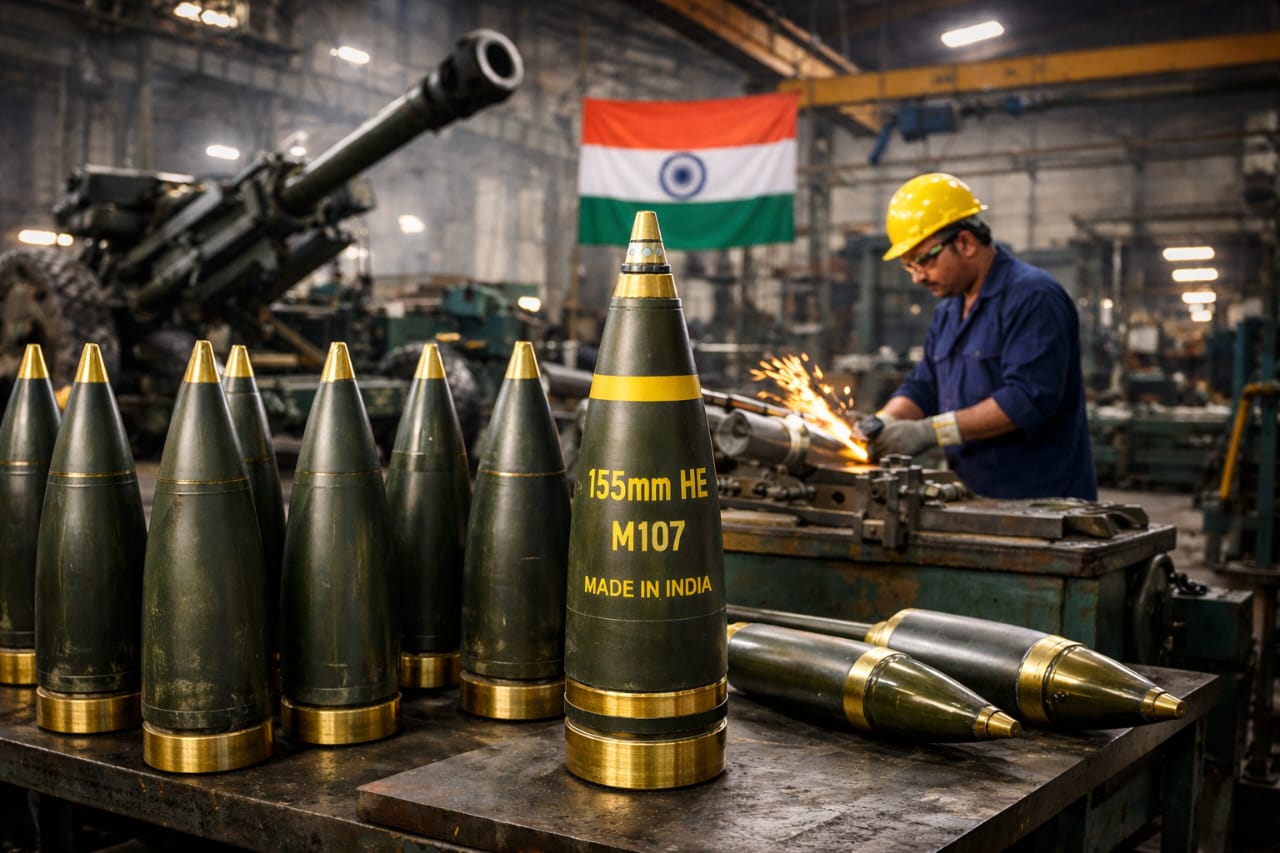
India’s defence manufacturing ecosystem is entering a decisive phase, and artillery shell manufacturing is emerging as one of the most compelling sunrise opportunities within it.
A Structural Global Supply Gap
Global demand for artillery shells has surged sharply amid prolonged geopolitical tensions. Industry channel checks indicate a global shortfall of nearly 3.25 crore shells, assuming no further escalation in conflicts.
The supply-side reality is stark:
- Current global manufacturing capacity: ~15 lakh shells per year
- Even if capacity doubles to ~30 lakh shells annually, the gap would still take 10–12 years to bridge
This is not a short-term cycle. It is a structural demand-supply imbalance, offering rare long-term visibility to manufacturers.
India’s Starting Point: Low Base, High Headroom
India currently produces only around 3 lakh artillery shells annually, largely through ordnance factories. This is materially inadequate relative to both global requirements and India’s own future needs.
From an economics standpoint:
- An unfilled 155mm shell generates approximately $250
- A filled shell is valued at nearly $2,100
The implication is clear: value addition lies in filling, integration, testing, and certification, not merely in metal forming.
Domestic Demand Set to Accelerate
India’s internal demand trajectory is equally compelling:
- Projected demand of ~10 lakh shells per year over the next 2–3 years
- Driven primarily by large-scale howitzer inductions and artillery modernisation programs.
This demand visibility significantly improves capacity utilisation assumptions for both incumbents and new entrants.
Policy Reforms Lower Entry Barriers
The government has moved decisively to accelerate domestic production:
- Private players can now participate without NOCs from ordnance factories
- Trial timelines reduced from ~2 years to ~6 months
- Faster approvals, quicker scale-up, and reduced execution risk
These reforms materially change the risk-reward equation, particularly for agile private manufacturers.
Why SMEs and Industrial Players Matter
Artillery shells are forging- and casting-intensive products, directly aligning with India’s industrial strengths:
- Heavy forging
- Precision casting
- Advanced machining
- Heat treatment and metallurgical expertise
This makes the opportunity especially attractive for SMEs and small-cap industrial players with existing capabilities and incremental capex requirements.
Several companies are already repositioning themselves to capture this demand. Goodluck India, a listed industrial company traditionally known for pipes, tubes, and engineering products, is pivoting towards defence and ammunition manufacturing through its subsidiary, Goodluck Defence and Aerospace Ltd.
This strategic shift reflects a broader trend where established manufacturers are leveraging their metallurgical depth, execution capability, and balance-sheet strength to integrate into India’s fast-expanding defence supply chain.
The Opportunity Ahead
Artillery shell manufacturing brings together multiple structural tailwinds:
- Multi-year demand visibility, driven by global shortages and domestic artillery modernisation
- High value-addition economics, particularly in filling, integration, and certification
- Strong policy support, with faster trials and reduced regulatory friction
- Scalable opportunity for SMEs and established industrial players, without greenfield complexity
As global supply chains de-risk and India accelerates defence indigenisation, ammunition manufacturing is transitioning from a niche segment to a core pillar of India’s defence manufacturing strategy.
For investors, this is not merely about defence spending, it is about identifying manufacturing platforms capable of compounding earnings over an extended cycle.